
Wow, we’re already two-thirds of the way through the year, and September is just around the corner, bringing the welcome start of autumn and, hopefully, some cooler weather. 🍂
For the first time in weeks, we actually had rain, and the deck in my pocket got damp on one of my twice-weekly walks to work. (Luckily, it was an inexpensive Cartamundi deck printed in China that already had a kink in it.) I’ve lost several good decks this way, so I try not to carry expensive cards loose in my pocket, but sometimes there’s no alternative. It might be time to start keeping my decks—and other small magic props—in a small dry bag, the sort of thing hikers and kayakers use for their phones. I may even go all in and get a Pelican 1010 Micro Case (sold as Peli in the UK). These cases are watertight and crushproof, so they would double as a card clip/protector. Something to ponder as the weather turns wetter and colder in my part of the world. (The 1010 looks the perfect size for a couple of decks, one stacked atop the other.)
This transitional time of year always impresses on me the importance of planning ahead. There are still four full months to work on my magic goals for the year—well, that’s what I keep telling myself as the year slips away from me! This month, I decided to refocus on the magic books I’ve been writing for ages (or, more accurately, not writing for ages). Part of the problem is that I have so many tricks, routines and ideas swirling around in my head that it’s difficult to decide which ones deserve to be included in a book. So I’ve spent some time settling on the contents of Great Magicians Grow Moustaches. To keep the project manageable, I’ve limited myself to fifty-four items—one for each card in the deck, plus two Jokers—each one listed and briefly described below.
Right, that’s enough rambling from me. Let’s get to the good stuff!
New on MBOT: Pasteboard Puppies
My friend Justin Higham diagnoses “Twisting the Aces” as a trick in need of a plot. After all these years and countless variations, nobody has given the reversals a good reason to happen. Eugene Burger arrived at the same verdict years earlier, dismissing it as a trick with no symbolic or emotional content. As much as I love Vernon’s classic small-packet effect, I think they’re both correct. What it has in abundance is economy of motion and visual surprise; what it lacks is a raison d’être.

So how do we keep what the trick does well—the economy of motion, the visual magic—while giving the reversals a reason to happen? Here’s my answer: the four Fours become four playful pups that roll over when told to. All except Shamrock, who holds out for walkies.
It’s my favourite way to present “Twisting the Aces”, and you can learn it on my blog.
Dolly Parton Card Trick 🎼🦋🎶
I was saddened to learn of Dolly Parton’s death on 25 August. I’ve always admired her as an artist and a performer, not only for her talent as a singer-songwriter, but also for her humility, sense of humour, and, most importantly, her endless compassion and kindness.
She’s also done more for education in the US than other celebrity “educational reformists”. In an era of grand ed-tech initiatives, she decided instead to post books to children—over 332 million of them since 1995 (7 million of those in the UK). What a great idea: giving the gift of reading to the world. 📚
Last year, I published the “Dolly Parton Card Trick” in Easy Does It #5. As this is an odd-numbered edition, it is behind the paywall. My friend John Montes suggested that now might be a good time to resurface the trick, in honour of the Queen of Country. So, I’ve made the article available to all:
Read Easy Does It #5: The Dolly Parton Card Trick 👈9️⃣⏰5️⃣💼☕💻
John has also filmed the trick for his excellent MonteTX YouTube channel. Thanks, John! ☺️ It features lots of great material if you’re looking for some card magic inspiration. Subscribe using the button below.

_(cropped).jpg)
The routine is no grand miracle, just a humble self-working trick that, like Dolly herself, is unapologetically camp and kitsch! It is very easy to perform, so I encourage you to learn it and perform it, especially if you have people in your life who are country music lovers or Dolly Parton fans. Maybe it will cheer them up a little at this sad time.
Rest in peace, Dolly. The world will always love you. 🩷
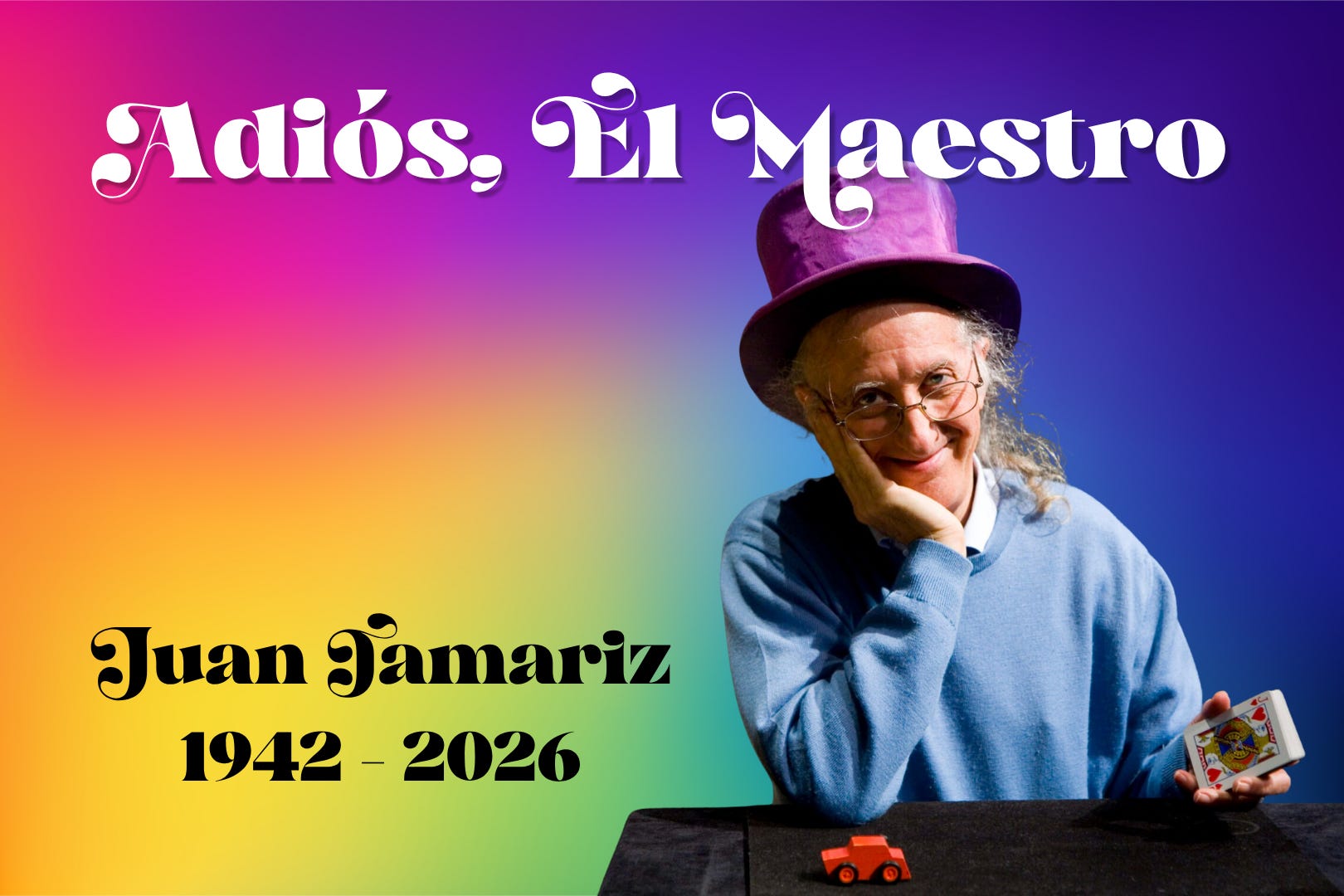
Adiós, El Maestro 🎻✨🌈🃏
By now, you will probably have heard the sad news that Juan Tamariz has also died. Spain knew him as a television star, but to magicians, he was the author of The Five Points in Magic, The Magic Way, Sonata, Mnemonica, Verbal Magic and The Magic Rainbow, and one of the most influential thinkers our art has ever produced. Affectionately known as “El Maestro”, Tamariz died in Madrid on 18 August 2026, aged eighty-three. He rightly deserves all the posthumous plaudits he gets: he was a genius and will be remembered as a bona fide legend of magic.
My thoughts and condolences go to his wife, Consuelo; his three daughters, Mónica, Ana and Alicia; his son, Juan Diego; his large extended family; and his many friends across the globe.
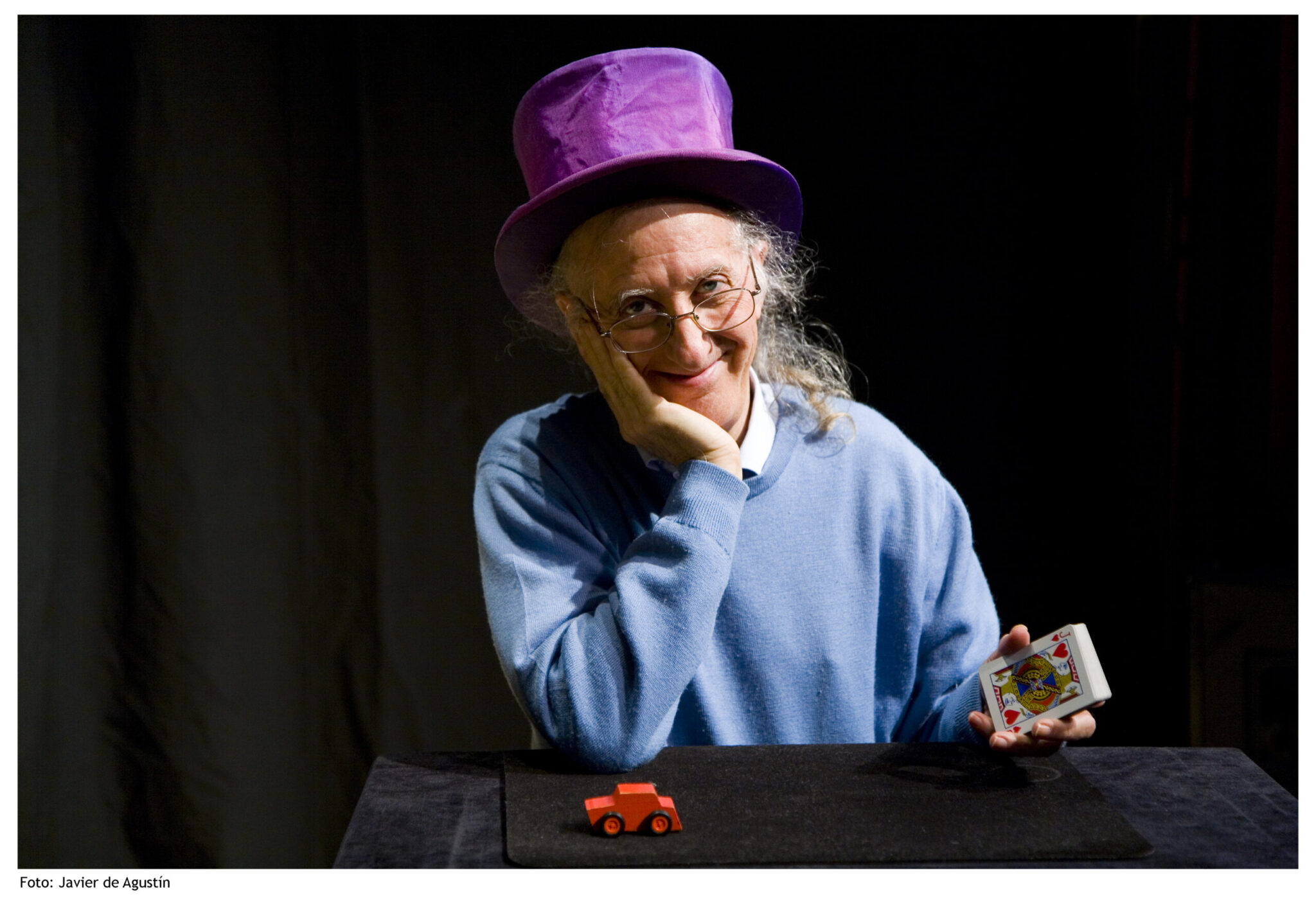
Although I never met Tamariz, I was fortunate enough to see him lecture and perform at the 72nd British Ring IBM Convention in Eastbourne in 2008, and again in 2015 at The Session in Cheltenham. Long before either, though, the first time I saw him perform was in a repeat of his 1994 appearance on the NBC special The World’s Greatest Magic. I had no idea who that crazy magician in the purple top hat was, but I was certainly impressed by the magic he performed with a small toy car and a deck of cards; I later learned that this was one of his signature tricks called “El Cochecito”, his version of the “Koornwinder Kar” by Dutch magician Dick Koornwinder.
Here’s how Tamariz describes the nature of magic, giving you a taste of his personal philosophy of magic:
“An extremely complex art that demands control of fingers, hands, body, voice, eyes, words and psychology; an extremely beautiful art that speaks of myths and symbols (with the depth of play), that enchants and haunts and fascinates and excites every layer of the brain, that brings us headfirst into mystery, that speaks to us of desired dreams—that imitates, not the human being as does theater, not the interior rhythm as does music, not the trill of birds as does singing, not nature (landscapes, people, sensations) as do painting and sculpture, not dreams as do movies. Instead it imitates the power of the gods (no less): the fascinating total art of magic.”
— Juan Tamariz, The Magic Rainbow
Tamariz was full of chaotic energy when he performed, which concealed a total mastery of sleight of hand and an exceptional practical understanding of misdirection. But there wasn’t a superior bone in his body. Tamariz didn’t care if you weren’t the world’s most talented magician; he valued passion for the art above everything else (the first of his famous Seven Veils of Mystery).
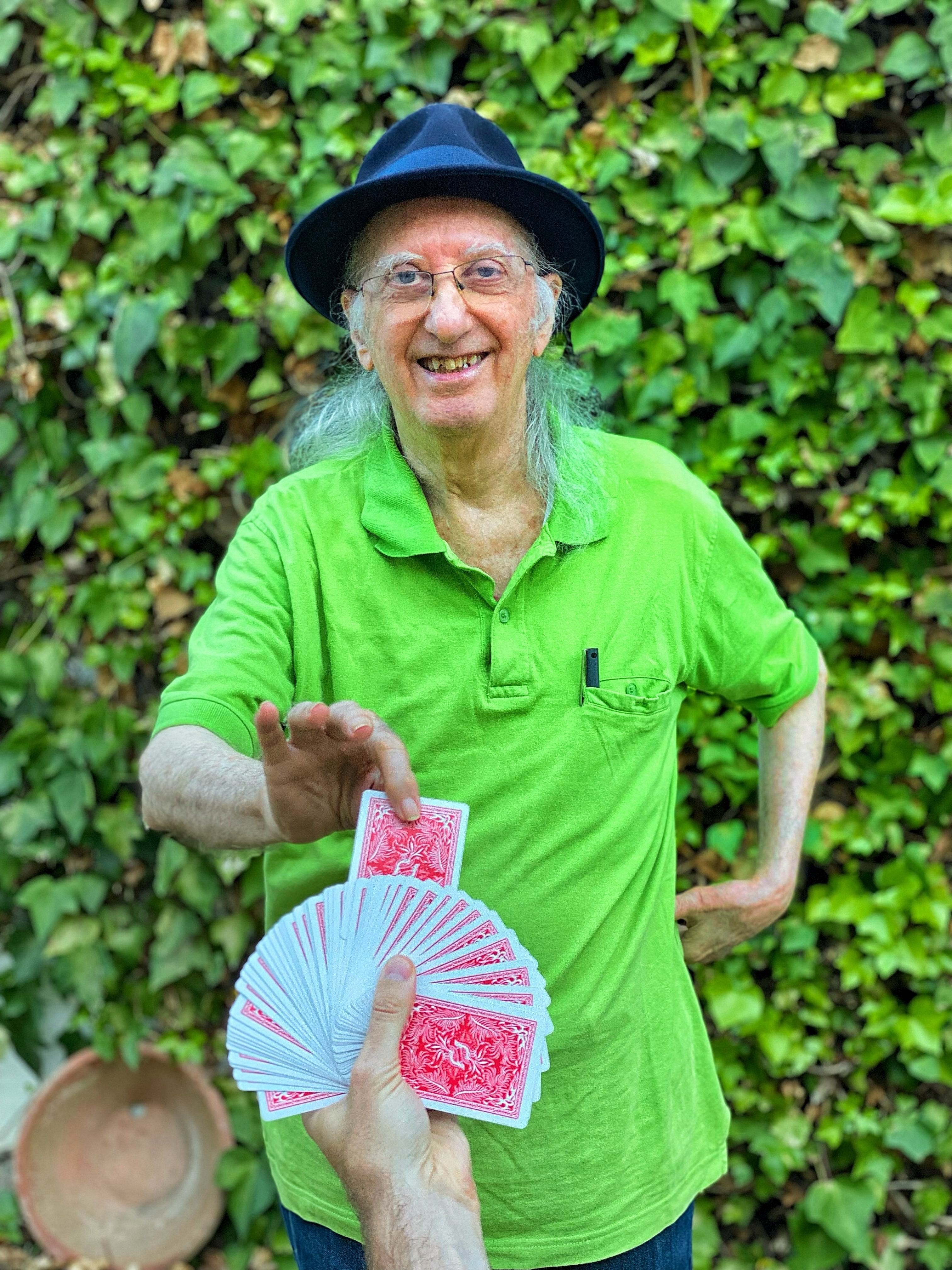
In 2008, at Eastbourne, I remember him telling a heartfelt story about his son. Whenever Tamariz travelled, he brought Juan Diego back a spinning top, but he always made him wait until he was home before opening it, so that he could watch his son’s reaction to the toy. If I remember correctly, he suggested we do the same with our magic (or at least that was the point of him recounting the story). We should make sure we enjoy the reaction our magic elicits from our audience. Don’t start tidying up your props or resetting the trick; enjoy the moment with your audience.
Meet enough big-name magicians, and it becomes painfully clear that many of them love themselves more than they love their audiences. Not so with Tamariz. His performing persona was zany and larger-than-life, but he loved his audiences, and they loved him back. Rest in peace, El Maestro. ❤
Fold & Flip
One of my long-term ambitions is to develop an entire act that combines magic and origami. To this end, I recently discovered a fun paper magic trick (technically, a flexagon1) from the papercraft YouTuber Polina (Polly’s Origami). I immediately saw more magical potential in it than the video suggested, and after dismissing some obvious uses—such as a boring card reveal—I spent some time building a simple app (with Claude’s help) to better understand what might be possible if letters were used on the model.
Note: If you’re interested in exploring this idea, you really need to watch Polly’s video. It’s only a few minutes long, and the rest of this section won’t make much sense unless you do. Thanks for such a great video, Polly!
The model has four panels but only ever shows three at a time. Fold and flip it, and each panel takes a turn at being hidden.
If you number the panels 1 to 4, as Polly does in the video tutorials, the sequence looks arbitrary. Label them A, B, C and D instead, and the magical potential of this thing becomes a little clearer:
Start ABC Panel D hidden
Fold 1 BCD Panel A hidden
Fold 2 ADC Panel B hidden
Fold 3 BAD Panel C hidden
Or, as a worked example: ABC → BCD → ADC → BAD.
Once the panels are letters rather than numbers, the paper toy’s algebraic nature becomes more obvious. Compare the first state with the last. The reveal is your opening word, with its first two letters swapped and the third—the letter C in this case—replaced. So you need to design backwards. You take the word you want to end on, swap its first two letters, and that gives you the first two letters of your opening word, leaving exactly one letter free to choose.
An interesting insight I discovered when chatting with Claude about the underlying mathematics is that you can treat Panel C as a “junk generator” because it appears in the first three states and never in the reveal. Put a wildcard consonant on that panel, such as X, Z, Q, J, K, V, and all three intermediate states turn to nonsense. The model effectively stays silent until the last fold and flip, which is what you want for a comedy prediction. Put a letter that makes the opener read as a word, and you get a joke instead, e.g., WTF → TFO → WOF → TWO, ESP → SPX → EXP → SEX or CAT → ATE → CET → ACE.
There are some obvious limitations. The model, like most simple flexagons of this nature, can’t completely change its initial state. Any two states share at least two panels, so the display can never wholly transform. This makes a card reveal impractical, as it is difficult to display both the suit and the value on a single model. Three visible squares mean you must force a three-letter card name, and only ACE, TWO, SIX and TEN qualify. The exceptions are cute rather than useful: the Tens fit as 1, 0 and H, and the Two of Hearts fits as T, W, ♥ if you’ll accept a Heart pip standing in for the O. Still, you might be able to find a better solution than I did.
Digits behave identically, so anything three characters long is available—a three-digit code, a house number, or a page reference in a book or magazine. It might also be possible to use the origami model as a four-way out in some kind of book test or confabulation routine. Something to think about, perhaps, especially if you like mental magic. 🤔
Graphics or symbols are also interesting. Because each panel is hidden exactly once per cycle, a single mark will vanish once every four folds, which is a small piece of magic on its own. I played around with the idea of a jumping frog on lily pads, three top hats, and a disappearing (and reappearing) rabbit—I think there might be potential in using it this way, especially as a cute promotional giveaway. 🐸🎩🐰
Always Use AI with CARE
The use of AI seems to be becoming more contentious by the day, so I thought I’d better mention my feelings on the topic: I have deep reservations about how the foundational AI platforms have been (and continue to be) developed by the sociopathic and, quite frankly, deranged tech bosses of Silicon Valley. However, I also think that it is an “ordinary technology” that will be beneficial to humanity, depending on the context, of course. I strongly believe that the AI bubble will burst soon and, hopefully, we’ll be left with a more helpful, less controversial AI landscape. (Or maybe it will get much worse and the machines will take our jobs or kill us all!)
In addition, as part of my day job, I’ve been tasked with helping university students use AI ethically and effectively (which isn't easy). One of the things I’ve developed to help them do this is this simple acronym/checklist:
C - Are you engaging in critical thought? What do you lose by not doing this yourself?
A - Is your use of AI appropriate? Would it be better to use a traditional search engine?
R - Is your use of AI reflective? Are you thinking about your own thinking? Remember to wear a metacognitive hat when using an AI tool like ChatGPT, Claude or Gemini. 🎓
E - Is your use of AI ethical? Does it raise any moral difficulties for you?
This last part of the checklist is the most difficult one for magicians and other artists to wrestle with. So I think I’ll leave that for another newsletter! 😉
I think this little project represents good use of AI because although I can code things like this from scratch, using Claude made the process much faster and, if I’m being honest, the end result is far better than it would have been if I hadn’t. It has also enabled me to search for interesting patterns and combinations that would have been impossible to find manually (after all, Claude was able to read through the entire Collins dictionary database). Some of what came back I simply wouldn’t have established with a notebook, a pencil and an afternoon of free time. For example, it found these gems for me:
NOW → OWE → NEW → ONE (the prettiest)
CAP → APE → CEP → ACE (ends on a playing card value)
And ABC is the only opener that reaches BAT (I’ve developed this one into a fun trick with origami animals using Roy Baker’s PATEO Force) 🦇
My overriding thought on “Fold & Flip” is that it could be used as a unique prediction effect alongside a word force from a book (or a list of three-letter words). But I’m publishing this as a rough draft before I’ve finished with it, because I suspect there are uses I haven’t thought of or discovered, and I’m curious to see if you can come up with anything better.
I also thought some of you might enjoy playing around with the app itself, so I’ve uploaded it to my profile on Itch.io (a place where you can host games and apps for free).
If you find something I’ve missed, I’d love to hear about it.
Great Magicians Grow Moustaches & Other Curious Card Tricks 🥸
And finally, here’s the big list of items that I plan to include in my first proper magic book, Great Magicians Grow Moustaches and Other Curious Card Tricks. Thirty-five of the fifty-four items will be brand-new, previously unpublished material. In other words, if you’re a regular reader of the Ruseletter and Marty’s Bag of Tricks, 65% of the stuff in the book will be new to you. The old material will also be thoroughly updated, and every item will be carefully explained, with plenty of hand-drawn diagrams to make learning as easy and painless as possible.
Remember, paid subscribers to the Ruseletter will get access to the draft as I write it, and will be able to download the ebook free of charge once I’ve finished it.
Here’s the list:
Deja Voodoo* – Using “Hollywood Voodoo” or “sympathetic magic”, the mates of two chosen cards mysteriously turn face up in the pack. (Used as a good demonstration of how to perform the Christ Force without a double-backer.) 🎩💀🃏
Sight Beyond Sight* – With a little help from Lion-O (the King of Hearts), you use the power of “sight beyond sight” to determine the identity of three randomly selected cards. Inspired by the clairvoyant Sword of Omens from the 1980s animated TV show ThunderCats! 😼
Clue Me In* – Three “clue cards” magically turn face up one at a time. All three cards share the same suit as the selected card, and when their values are added together, they add up to the chosen card’s value. 🔍
What the Deuce?* – Similar effect to “Clue Me In”. However, the three “clue cards” are all Twos. The missing deuce is the chosen card, which is found sixth from the top of the deck (2 + 2 + 2 = 6). The five face-down cards are turned over to reveal a royal flush in spades. 🤔❓
Tongue Sandwich* – A card sandwich routine using a small-packet colour change (the Tongue Change). Two black Queens trap a single card. It’s the Queen of Hearts, which isn’t the spectator’s selected card. The red Queen is pushed through the two black ones, transforming into the chosen card. 👅🥪
Pasteboard Puppies – A short routine combining two classic packet tricks: Vernon’s “Twisting the Aces” and Dr. Daley’s Last Trick. The four Fours become four badly behaved dogs that roll over on command—all except Shamrock, who won’t budge until the magician offers him walkies. The two black dogs then magically switch places with the red ones because, as you explain to the audience, they’re “purebred labracadabradors”! 🐶🐶🐶🐶
Extending the Elongated Lady* – The Peter Kane classic with additional phases. Trapped between two Jokers, a Queen stretches, twists and then vanishes (or changes colour from black to red). Surprisingly, this version doesn’t use any specially made gaffed cards.
Great Magicians Grow Moustaches* – The title trick of the book. A signed King of Hearts is trapped between two double-blank cards. The King stretches, then returns to his normal length. The King is placed into your pocket, then magically jumps back to your hand, between the two blank cards. A capped Sharpie marker is waved over the King, who is being held by a participant, and an inky moustache inexplicably appears on his face. The presentation is based on a recurring dream you had as a child (if you’re a female performer, you can choose to use a Queen instead of a King). 🥸
Out of the Blue* – You tell a spectator that you will give him the ability to locate the four Aces in a shuffled deck. Disappointingly, he only manages to find one. You offer to fix “his mistake” but accidentally change the backs of the four cards from red to blue, jokingly admitting that you “BLUE it, too!” Finally, the three indifferent blue-backed cards are transformed into the missing three Aces. Included as a basic demonstration of the Minus One Switch (still a decent enough trick, though).
Sexo Chango* – Similar to the above, four red-backed Queens transform into four blue-backed Kings. A demonstration of the Minus None Switch.
Colour Changing Kings to Aces* – This is my re-interpretation of a Marvin’s Magic classic. After the red and black Kings magically transpose, the backs of the cards change from red to blue. The cards then transform into the four Aces. Unlike the original, all four cards can be examined at the end of the routine. Uses the Sticky Minus None Switch.
Royal Masquerade* – Four red-backed Jokers transform into blue-backed Queens, then into Kings. Again, all cards are examinable at the end of the trick. Also uses the Sticky Minus None Switch. 🎭
Sherlockian Sarnie – A sandwich trick with a story about the famous Baker Street detective and his able assistant. During the course of the routine, Sherlock Holmes and Dr. Watson capture Professor Moriarty (the chosen card) and recover a hoard of stolen diamonds. 🔍🥪
Peruvian Sandwich – A very entertaining sandwich routine involving three selections (the third card is chosen by the magician) and two odd-backed Jokers. The Jokers trap the first two cards in the usual way. You then tell your participant that she’ll find your card on her own. Miraculously, her card transforms into your chosen card! 🥪
Backlash Butty – My go-to modular, multi-phase sandwich routine (using the Tongue Change). 🥪
Sandswitch Surprise* – Another sandwich routine using the Double Tongue Change. The wrong card appears between the two face-up sandwich cards (the black Queens). It is transformed into the first spectator’s card and placed aside. Another face-down card appears between the black Queens. It is “twisted” face up; it’s the first spectator’s card again. The card on the table is turned over to reveal the second spectator’s card. (Can be modified to include three chosen cards.) 🥪
Family Affair* – The Jack, Queen and King of Hearts find two chosen cards lost in the pack. A straightforward way to perform Roy Walton’s Collectors plot.
Coven* – Another simple approach to the Collectors. Three “witches” (Queens) capture two selections lost in a deck thoroughly shuffled by a spectator. 🧹🐈⬛
Competition Collectors* – You offer to perform a trick that once won a magic competition. Four blue-backed Kings instantly locate three freely selected cards lost in the deck, the three cards appearing interlaced between the blue-backed cards. You tell your audience that all four judges gave the trick the maximum mark of ten. The four blue-backed Kings are turned face up; all four have transformed into Tens. 🔟🔟🔟🔟
Soul Seekers* – A similar routine to “Competition Collectors”, four double-blank playing cards—ghostly apparitions, you say—are printed, front and back, into four Kings. These ghostly monarchs disappear into the deck. Three cards are freely chosen, then lost in the pack. The Kings transform back into their phantasmal form, trapping three cards—the three selections. 👻👻👻👻
High Card to Hell – A highly theatrical card trick in which two spectators unwittingly play the roles of an unlucky gambler and the Devil in disguise. After the gambler cuts to three sinister Sixes and loses his soul, the Devil offers an impossible wager: find all four Aces to win it back, while secretly knowing that the Ace of Clubs is missing from the deck. Acting as the hero, you, a fellow gambler and “world-famous magician”, spectacularly produce three Aces and triumph by magically transforming the Devil’s own card, the Seven of Clubs, into the missing fourth Ace, beating the infernal demon at his own game. 🔥
A Swindle of Souls – In this bizarre storytelling card routine, based on “Wagers of Sin” by Max Maven, you cast yourself as the Devil and a spectator as a compulsive gambler making a high-stakes wager to avoid “The Devil’s Bedpost” (the Four of Clubs). Despite thoroughly mixing and eliminating cards from a thirteen-card packet, the spectator inevitably lands on the cursed card and, as prescribed in a poetic prediction, loses their immortal soul. Granted a chance at redemption, the spectator mixes and eliminates the cards a second time, successfully locating the redemptive Ace of Clubs. For a stunning finale, the remaining twelve discarded cards are revealed to have magically arranged themselves into perfect numerical order. 💀
Beelzebet – In this narrative-driven routine, you recount a fateful encounter with a mysterious stranger using a packet of eight cards and a signed, sealed prediction. Through a seemingly fair process of elimination, the spectator is inevitably left holding the unlucky Four of Clubs, which your poetic prophecy reveals has just cost them their immortal soul—a fate punctuated by the visual shock that the Four is the only red-backed card, ominously bearing the number “666”. Offered a final chance at redemption through a second poem, the spectator shuffles and deals the remaining cards, miraculously isolating the Ace of Clubs to win back their soul and secure a heavenly escape. 👿
The Devil is Dyslexic – In this comedic twist on Three-Card Monte, you use the Four of Clubs—signed on its face—as the “money card”. After magically changing the signed card’s back from red to blue, you restore its original colour and reveal an ominous message on it: “SANTA IS MY MASTER!” 🎅🏻 Once the obvious error is pointed out, you visually erase the text, freeing the spectator from his contract with the big man in red. For a final, stunning souvenir, you hand the signed red-backed card to the mark, where it impossibly changes back into a blue-backed card. Based on Max Maven’s classic packet trick “Mo’ Monte”.
Satanic Switcheroo* – The Four of Clubs magically trades places with the Ace, Two or Three of Hearts, as chosen by a spectator. 👿🔄
Jumpin’ Jackalopes* – A multi-phase approach to Dr. Daley’s Last Trick. You display four identical Jokers. Two of the cards are transformed into the Jack of Hearts and Diamonds. These four cards, the two Jokers and two Jacks, jump about in a chaotic fashion, magically switching places with one another. 🐇
The Jaybird Jump – Another clever and efficient handling of Dr. Daley’s Last Trick using two Jokers and two Jacks. It can, and possibly should, be performed as the final phase of “Jumpin’ Jackalopes”. 🐦
Pieces of Eight* – A highly unusual two-card transposition using the Seven and Eight of Diamonds, both torn in half. ☠
Chromosome Monte* – A Three-Card Monte routine using two X cards and the Queen of Hearts. One of the Xs turns into a Y, and the money card follows suit by transforming into the King of Hearts. ✖✖
La Dame en Rouge* – Another unusual treatment of Three-Card Monte using two blue-backed Jokers and a red-backed Queen of Hearts.
Misprint Monte* – A combination of Three-Card Monte and Wild Card using blank-faced playing cards.
Frankenstein’s Monte* – Several modular “building blocks” to enable you to make your own monster of a Monte routine!
Too Hot Two Trot – An alternative handling of Al Leech’s “A Hot Card Trick”, more commonly known as “Chicago Opener”. The backs of two selected cards transform from blue to red. It also includes an impressive transposition between the two chosen cards.
Red Hof Mama* – A combination of “Chicago Opener” and the Hofzinser Ace Problem.
Red Hot Open Prediction* – A prediction effect using a red-backed card. Inspired by Paul Curry’s Open Prediction.
Thought Red-Handed* – A new approach to Dai Vernon’s Five-Card Mental Force that always ends in a successful outcome.
Lumberjack Location* – The Jack of Hearts helps you locate a freely selected card. 🪓
Double Duck-and-Deal Discovery – A fun double-location effect based on Jim Steinmeyer’s classic packet trick, “The Nine Card Problem”. Two participants each select a card from a nine-card packet and mix their cards using a unique spelling procedure. After the packets are combined, you successfully locate the first selection using a “Duck and Deal” elimination process. The attempt to find the second card seemingly goes awry when an incorrect card is found and set aside. But a final repetition of the deal astonishingly reveals that the discarded “wrong” card has actually become the second selection. 🦆🦆
Piquet Placement* – A semi-automatic trick using a thirty-two-card Piquet pack. Three random cards are used to locate a freely chosen card lost in the shuffled deck.
Lost and Hound – Another location effect using a Piquet pack. The Four of Clubs acts like a bloodhound and sniffs out a selected playing card. 🐕
Stopped Four Times* – A new way to perform the Karl Fulves classic “Gemini Twins” that makes the already strong coincidence effect even more impossible. The cards above and below the face-up “prediction cards” are removed. The performer then reverse-counts each packet until the spectator calls out “stop”, eliminating one card from each group. The two randomly chosen cards are the matching mates of the two prediction cards. 🛑🛑🛑🛑
Jackpot Jokers* – In this Blackjack-themed routine, four identical Jokers magically transform into four Jacks, which are then placed face up at random positions in the deck by three spectators and the performer. Each Jack is extracted, along with its two adjacent cards, forming four separate packets. The performer then reverse-counts each packet until the spectator calls out “stop”, eliminating one card from each group. The routine concludes with a surprising twist: when the face-down card paired with each Jack is turned over to determine who holds the winning Blackjack hand, each card is revealed to be an Ace of the matching suit—Amazing! 🃏🃏🃏🃏
Soulmate Synchronicity – In this deeply romantic card trick, the deck is split into two piles, one for the bride and the other for the groom. You produce the King and Queen of Hearts from each half. The bride and groom then bury these two cards in their portion of the pack, which is then reassembled. After splitting the deck again, the couple deals through the two halves simultaneously, miraculously revealing that their King and Queen have found each other at the exact same position.
Shidduchim* – An elaborate version of Larry Becker’s “Will the Cards Match” using a handful of matchsticks and the Ace through Ten of Hearts torn in two.
Royal Families* – A romantic coincidence effect using the twelve court cards. A woman finds the King of Hearts, which is then used to locate the Queen of Hearts. The couple then “have a baby” (the Jack of Hearts). The other cards then magically sort themselves into the three remaining family units. 👑
Red Thread of Fate – A highly romantic and visual routine using a red string and a small packet of blank cards explicitly designed for couples. In this evocative performance piece, you restore a severed “Red Thread of Fate” tied between a bride and groom, then introduce a packet of blank playing cards. While physically connected by the thread, the couple works together to mix the cards and perform an elimination ritual that miraculously transforms their final two blank cards into the King and Queen of Hearts. To conclude the effect, you hole-punch the royal cards and permanently bind them together with the restored thread as a meaningful keepsake. Also includes an alternative handling in which the King and Queen transpose while tied together by the red thread of fate!
Marital Bliss* – Similar to “Jumpin’ Jackalopes”. Two out of four identical Jokers transform into the King and Queen of Hearts. These two cards represent a married couple. The cards switch places several times in a surprising way. Finally, the other two Jokers transform into the Ten of Hearts and the Ten of Diamonds, delivering a heartwarming message of love and good fortune to your audience. 💒
Double Happiness – A deeply romantic self-working coincidence effect involving a Chinese “hongbao” (red lucky envelope), a numerological chart, and a deck of playing cards. 💕
The Axeman’s Ghost – The magician and a spectator perform a “supernatural ritual” to summon the ghost of the terrifying Axeman of New Orleans. 🪓👻
The Little King Who Wasn’t There – A paranormal packet trick set to the poem “Antigonish” by Hughes Mearns. Based on a similar trick by Roy Walton called “Poetry in Motion”. 🫅
Twodoo Voodoo – A two-person version of Guy Hollingworth’s “The Voodoo Card”.
Hickok’s Hole Card – A simple card trick with a presentation based on the death of the famous gambler and gunslinger Wild Bill Hickok. 🤠
?
?
Three Videos Worth Watching
Once again, here are three videos that I think you should watch this month. All three feature Juan Tamariz.
Juan Tamariz Performs a Card Trick for Ali Cook & Pete Firman
Duration: 5 minutes
This footage is from an old TV show called The Secret World of Magic, presented by a very young, fresh-faced Ali Cook and Pete Firman. I remember watching this on TV when the series first aired in the UK (over twenty years ago now). The trick is typical Tamariz and clearly fools the heck out of the boys!
Juan Tamariz Interview with Dani DaOrtiz
Duration: 7 minutes
Here’s a brief interview in English between Juan Tamariz and one of his most successful students—the incomparable Dani DaOrtiz. I had no idea that Juan’s Seven Veils of Mystery were an actual physical feature of the teaching environment at his home!
The Mathematics of the Mirror: The Magic of Juan Tamariz
Duration: 48 minutes
This is a wonderful Spanish TV show celebrating Juan and his life in magic. It originally aired on RTVE in 2024 and features some beautiful piano performances by Juan’s daughter, Alicia, an accomplished musician, composer and jazz singer in her own right. We’re also treated to three performances by Juan himself and an unusual mind-reading feat by his wife, Consuelo. There’s also a brief conversation with his daughter, Ana, a professional magician who runs a successful magic school in Madrid.
As my Spanish isn’t very good, I quickly put together an interactive transcript to play alongside the recording, so I could better understand the interview segments (and try to improve my conversational Spanish in the process).
Here’s a link to the HTML file (on Itch.io) if you’d like to do the same. It works best when using “split view” in Google Chrome. You might have to pause it (or nudge it by a few seconds) when it falls out of sync with the YouTube recording.
The TV show is well worth the effort, even if your Spanish is as poor as mine! I’ve always felt that some of the magic of Juan’s performances is lost in translation. Seeing him perform in his native tongue for an appreciative Spanish audience is an education in itself and a reminder of what a special and profound performer he was.
That’s your lot for this month. It’s been a sad one, but Juan spent his whole career insisting that magic is a joy, and I’m not about to argue with him now. So go and perform a card trick for somebody this week—and when you get the reaction, just stand there and enjoy it. And maybe play an invisible violin in El Maestro’s honour. 🎻
Yours Magically,
Marty
This origami model sits firmly in the flexagon family, and there’s more conjuring literature on this topic than the papercraft world realises. Martin Gardner introduced “hexaflexagons” to a general readership in Scientific American in December 1956. It was this article that prompted his editor to commission his famous “Mathematical Games” column, and it reappeared as the opening chapter of the first bound collection, reissued as Hexaflexagons and Other Mathematical Diversions. Robert Neale has spent much of his magical career focusing on paper magic. Robert Harbin was an early pioneer of origami in the West: the first president of the British Origami Society and the first Westerner to use the word “origami” for the art of paper-folding. His books did more than anyone else’s to make it a popular pastime in Britain, and his seminal Secrets of Origami (1964) featured the work of ten creative folders, Neale among them.