
Welcome to another edition of Packet Trick Paradise, my regular column in which I share my never-ending love of packet tricks with Ruseletter readers. In this instalment, we’ll explore a fast-paced routine that uses four regular playing cards, called “Imitation Aces”. I’ve designed this trick to function as a prelude to Dai Vernon’s “Twisting the Aces”, but it can also be used before you perform your favourite version of Dr. Daley’s Last Trick (or any four-Ace trick for that matter).
📋 Quick Reference
Effect Type: Packet Trick
Difficulty: ★★★☆☆ (Intermediate)
Audience Size: Close-up/Parlour
Duration: 5-7 minutes
Setup Time: Minimal
Reset Time: Instant
Props: Four regular Aces and an opaque envelope
Key Moves & Principles: Block Turnover, Diminishing Lift Sequence, Flushtration Count, Through the Fist Flourish, Twirl Change, Shapeshifter Change
“Imitation Aces” is the first effect in a three-trick set called “Duty Aces”, which will be published in the next issue of Corrupting the Classics. Each trick in the set uses the same set of simple props (the four Aces and a black envelope). This is my attempt to create a short packet trick that doesn’t rely on extra cards; something that’s surprisingly difficult to do.
The Effect
Here’s what happens in “Imitation Aces”:
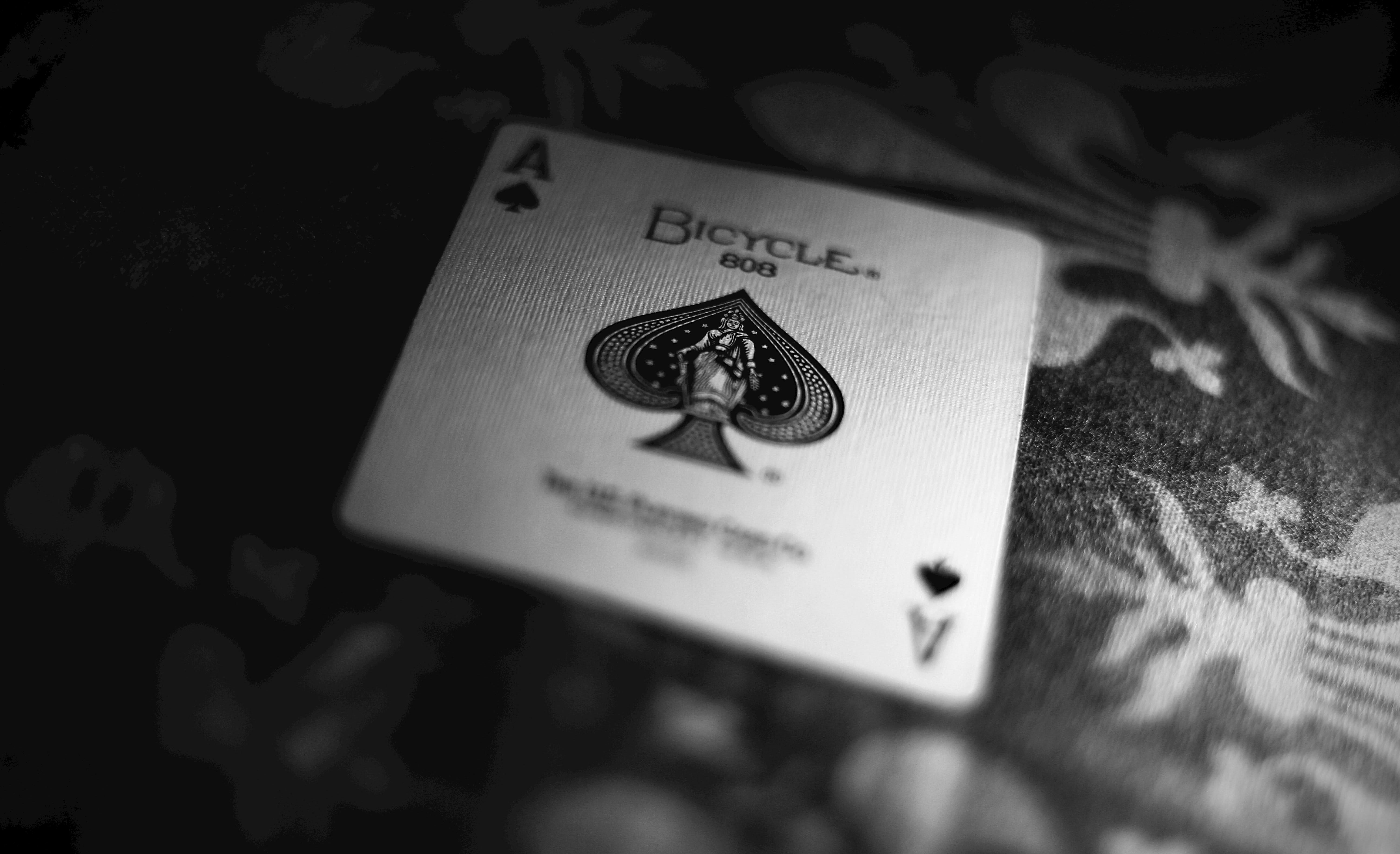
Four Aces of Spades are displayed by the magician, who explains that only one of them is genuine. The three “counterfeit cards” visually transform into the Aces of Diamonds, Hearts and Clubs, leaving the performer with four regular Aces.
Beyond the handling itself, which is well within reach of intermediate card workers, I’ve developed a unique presentation for the trick based on the fascinating—and largely forgotten—history of the Ace of Spades and its link to the British tax system.
The Death Card 💀
From 1711, the British Government collected tax revenue on playing cards through a series of stamp duty laws, initially requiring a hand stamp to be placed on one card, typically the Ace of Spades, as proof that duty had been paid on each pack of playing cards sold.
In 1765, this system was formalised, and card makers were required to purchase every Ace of Spades directly from the Stamp Office, which printed them with an elaborate royal coat of arms to deter forgery. Counterfeiting these “duty Aces” was regarded as a serious crime and capital offence; in 1805, the card maker Richard Harding was hanged at the Old Bailey for making fraudulent copies of the Ace of Spades. No wonder some people call it the death card! 💀
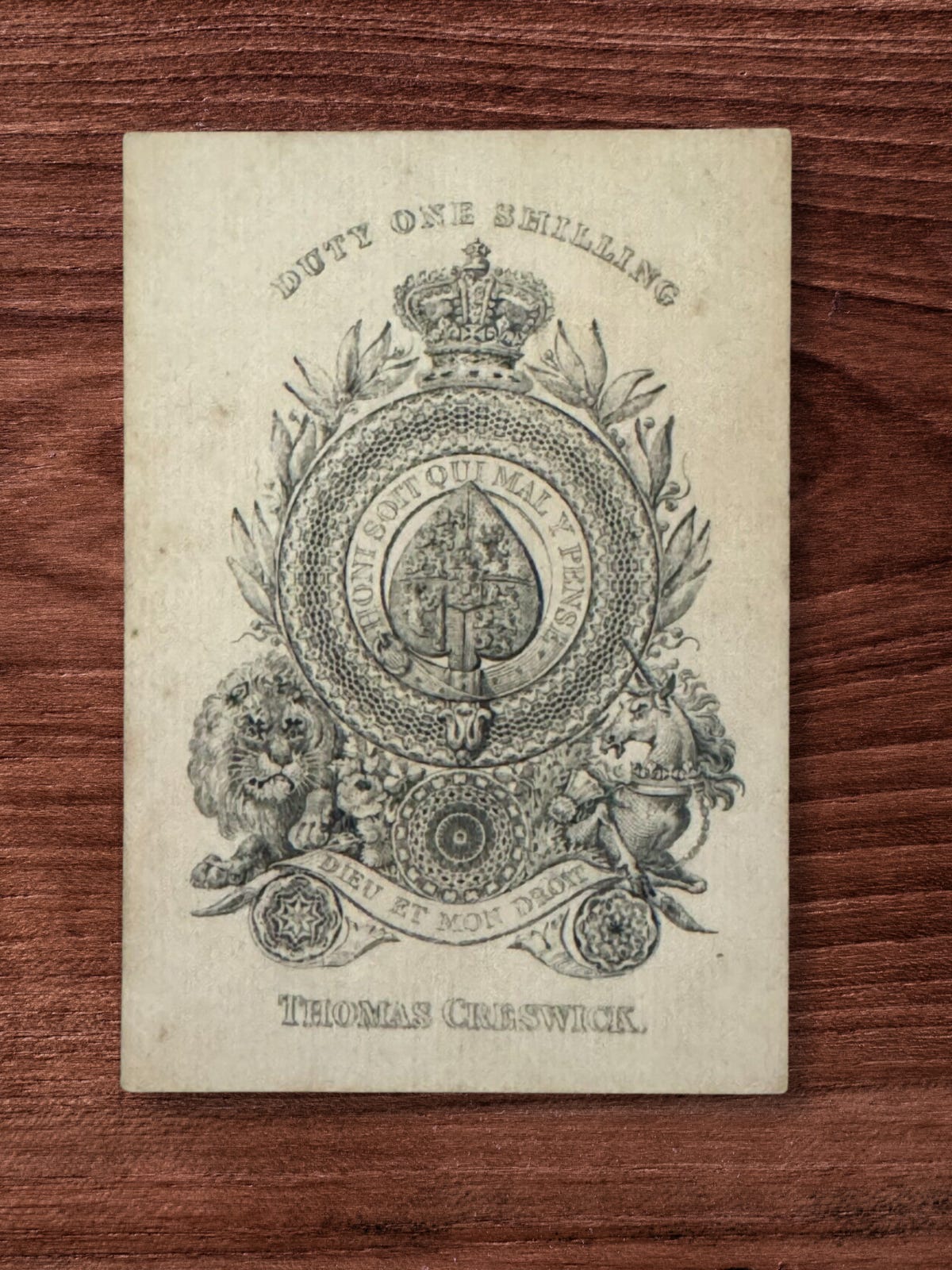
In 1828, an even more ornate version was introduced—printed by Perkins Bacon on behalf of the Commissioners of Stamps (see image above). It bore a lion, a unicorn and considerably more foliage than its predecessor. This elaborate, banknote-style design became known as “Old Frizzle”. The system remained in place, in various forms, until the duty was finally abolished in 1960. However, the tradition of ornate, intricate pip designs on the Ace of Spades has endured and become a standard feature across most modern deck designs.
Shake, Snap and Sniff! 🫨🫰👃
Like many magicians, I also collect playing cards, so it makes perfect sense to talk about their history when performing card magic. This trick enables you to begin with a strong hook, such as:
“How good do you think you are at spotting a fake?”
“Do you think you could tell a forgery from the real thing?”
“Have you ever held a card that was worth a man’s life?”
“I’d like to show you something I probably shouldn’t—not because it breaks the magician’s code, but because it’s treason. Well, at least it used to be.”1
“In another century, what I’m about to show you would have cost me my neck.”
“In 1805, four cards like these cost a man his life.”
You can then continue by saying, “In this envelope, I have four playing cards—one is genuine; the other three are forgeries.” This gives you a compelling way to begin the routine and instantly captures your audience’s attention. The historical details help to sustain that interest as the routine progresses.
I particularly like the silly way the transformations are described as historic tests for detecting forgeries; you begin with the “shake test”, then the “snap test”—both of which sound semi-plausible (although they are, of course, complete nonsense). But you finish with the most absurd: the “sniff test”! 👃 This presentational framing gives you plenty of scope to interact and have some playful fun with your audience, e.g., by getting them to smell the cards themselves. Of course, you can lean into the more serious and solemn side of the presentation if that’s more your thing. As I perform this as an opener, I tend to take a more lighthearted approach with a touch of the ridiculous.
Want to learn it? The full tutorial, along with performance tips and credits, is now available on my blog:
Yours Magically,
Marty
P.S. Incidentally, the suggested presentation that I’ve included would also work well when paired with Peter Kane’s Wild Card plot, in which you transform the cards into duplicate Aces of Spades. In fact, I’m currently playing with a handling by Eric DeCamps called “Impromptu Wild Card,” which was released as a video download by Fantasma Magic circa 2008. While the product is no longer available, you can still watch a performance of it on YouTube. I’ve found that it is possible to modify the handling so that you appear to print four Aces of Spades before transforming three of them, all at once, into the Aces of Hearts, Clubs and Diamonds. Once I’ve worked out the details, this will be published as “Forged Aces” in a future edition of Packet Trick Paradise.
While sometimes colloquially labelled “treason”, counterfeiting the Ace of Spades was more precisely prosecuted as forgery and as a capital felony (tax fraud against the Crown). But for dramatic purposes, I think it’s fine to stretch the truth a little!
Thanks for sharing - this is really great Marty!